Commercial Waste in Sydenham

Commercial waste in Sydenham needs a practical, dependable approach that keeps day-to-day operations moving while making sure rubbish is handled correctly. Our service covers the collection and removal of business waste from premises such as offices, shops, workshops, hospitality venues and other commercial sites, with an emphasis on clear sorting, tidy loading and responsible disposal. The aim is simple: help businesses clear unwanted material without turning waste into a disruption.
We handle routine commercial rubbish as well as bulkier items that can build up when premises are refitted, reorganised or stripped out. That can include mixed general waste, office furniture, packaging, shelving, broken fixtures, and other non-hazardous items that need moving from the site. If you are comparing options, tell us what needs removing and we can discuss the most suitable way to approach the job.
For many customers, the main decision is whether the work needs a straightforward collection, a more organised clearance or a combination of both. Our service is built around that choice. We can work from ground-floor premises, upper floors or shared access buildings where conditions allow, and we aim to keep the removal process orderly so the remaining space is ready for normal use again. For a quotation, you can get in touch and describe the waste.
Business waste removal for regular premises
Business waste removal is most useful when there is a steady stream of unwanted material that needs taking away without interrupting staff, customers or deliveries. That often includes bagged rubbish, packaging, cardboard, broken small items, and general refuse that has accumulated after trading hours or during a busy period. The work can be arranged to suit the type of premises involved, whether the load is being cleared from a stockroom, work area, office floor or shared rear access point.
Where different waste types are mixed together, sorting them before collection can make the job easier to manage and can help separate recyclable material from general rubbish. It is also worth noting that some items require extra care, such as electrical equipment, refrigeration units or materials that may have special handling rules. If the load includes anything unusual, we can discuss what is suitable for removal and what should be treated separately. This keeps the process more straightforward and avoids surprises on the day.
Because business waste often varies from one collection to the next, a useful quote usually depends on a clear description of the material, the volume involved and how accessible it is once we arrive. If access is awkward, or if items are spread across several rooms, that can change the time and effort needed. Good information at the start helps, especially when a premises has limited parking, controlled entry or loading restrictions. See pricing and quotes for a clearer picture of how enquiries are assessed.
Office clearance and workplace furniture

Office clearance work is often about removing items that are no longer needed while keeping the remaining workplace usable. Desks, chairs, filing units, cabinets, computer peripherals, shelves and reception furniture are all common examples. We can also clear mixed office waste left after a refit, relocation or de-clutter, provided the items are appropriate for removal. The aim is to leave the space cleaner and easier to use without creating a further chore for the business team.
When workplace items are being removed, it helps to separate what will be kept, reused or recycled before collection begins. That is especially relevant for offices with archived paperwork, IT kit, display items or branded fixtures, because the wrong mix can slow everything down. If confidential material is present, it should be dealt with through a suitable process rather than mixed into general rubbish. Confidential shredding is relevant where documents need a secure route rather than ordinary disposal.
Some office clearances are completed in stages, particularly where departments, floors or storage areas need different treatment. Others are simpler and involve one main loading point, which can make the job quicker to organise. Either way, the important part is making sure the waste stream is identified properly before collection. If you are planning a clearance alongside a move or refurbishment, it is sensible to list the furniture and equipment first. Then request a quotation when you are ready.
Furniture, fixtures and bulky items
Commercial furniture removal is useful when premises need to be emptied of bulky items that are difficult to move through ordinary rubbish services. That can include desks, office seating, shelving, shop fittings, counters, tables, cabinets and other large items that still need careful handling even when they are no longer wanted. We can remove pieces one at a time or as part of a broader clearance, depending on how the site is set up and how much material needs shifting.
Bulky furniture often raises practical questions about dismantling, access and reuse. Some items can be lifted out intact, while others may need to be taken apart to fit through doorways or narrow stairwells. It is also worth considering whether certain pieces are still suitable for reuse elsewhere, since that may affect how the waste is sorted before it leaves the property. Where furniture is badly worn, stained or damaged beyond practical use, disposal becomes the more straightforward option.
For customers comparing disposal routes, a simple approach is to check whether the items are ordinary furniture, mixed commercial rubbish or equipment with separate handling needs. That helps determine how the job is priced and organised. Measure up awkward items if you can, and make a note of any access restrictions, lifts or loading bays. If you want to move ahead, you can ask us for a quotation based on the furniture list.
Specialist disposal for appliances and mixed waste
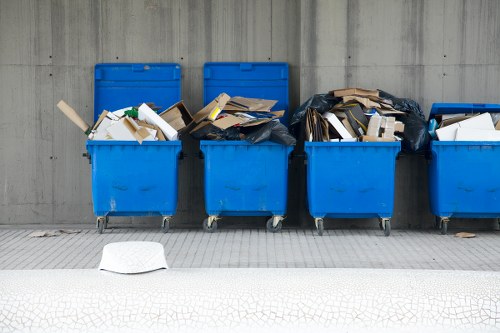
Some commercial clearances involve appliances or heavier items that are not best treated as standard rubbish. Fridges, freezers and other electrical units need appropriate handling, particularly when they come from food service, retail or workplace settings. We can help remove these items when they are listed clearly and are suitable for collection. Mixed waste loads may also include broken fixtures, redundant stock containers, packaging and non-hazardous scrap that has built up over time.
When appliances are included, it is sensible to think about what else is being removed at the same time. A single collection that combines appliances with general waste, shelving or furniture may be more practical than arranging separate visits, but that depends on what is on site. Some loads require more care because of weight, shape or internal components. Fridge and appliance removal gives a more focused route when those items make up part of the job.
There are also cases where a business needs a broader waste tidy-up rather than one item taken away. In that situation, the main question is how the various materials should be grouped so that the collection is efficient and compliant with ordinary disposal practice. Clear item descriptions are valuable, especially if the load includes a mixture of furniture, appliances and general rubbish. If you are unsure how to classify everything, send us the details and we can talk through the most suitable quotation.
Clearances for garages, stores and back rooms
Commercial waste often gathers out of sight in garages, storage rooms, rear yards and back offices, where items are left because they are not urgently needed. Our clearance service is well suited to these spaces when the aim is to remove accumulated rubbish, redundant stock, damaged fixtures or old equipment from a confined area. Clearing these spaces can be particularly helpful before a refit, inspection or change in how the premises is used.
Garages and store rooms often contain mixed contents, so the first step is usually to separate items that are staying from items that can be removed. This might include sacks of waste, old signage, broken shelving, packaging, offcuts or spare fixtures that no longer have a use. Where a site has limited access, it helps to know whether the waste is on shelving, behind other items or stacked tightly in corners. Those details affect how the work is planned and how long it may take.
For larger commercial spaces, it is often worth combining several clearance tasks into one visit rather than dealing with each corner separately. That can be more efficient, provided the contents are identified sensibly before the collection begins. Garage clearance is a useful reference if the hidden storage area is part of a wider clean-out. If you have a similar commercial space in mind, ask for a quotation and describe the contents as plainly as possible.
Recycling, sorting and waste responsibility

Responsible commercial waste handling is not just about taking material away; it is also about deciding what can be separated, reused or sent onward appropriately. Many business clearances include cardboard, metal fixtures, plastic packaging, broken office equipment and mixed refuse, and these need sensible sorting before disposal. A well-planned collection makes it easier to keep recyclable material apart from ordinary rubbish where that is practical.
That sorting stage is one of the reasons a clear description of the waste matters. A load consisting of office chairs and desks is different from a load of mixed shop waste or workshop offcuts, even if the overall volume looks similar. If there are items that may need specialist handling, they should be identified before collection so the right arrangement can be made. Recycling and sustainability is relevant where you want to understand the broader handling of recyclable materials within a commercial clearance.
We also take care to keep ordinary removal work separate from anything that needs a dedicated route, such as materials that are classed differently because of contamination or other handling restrictions. Not every enquiry is complex, but a short list of the waste types, room locations and access points usually helps more than a vague description. Write down the main items first, then ask for a quotation when you are ready to proceed.
Pricing, access and quotation details
The cost of commercial waste removal is usually influenced by the type of waste, how much there is, how easy it is to access and whether any items need special handling. A single office clearance, a stockroom tidy-up and a mixed premises clearance can all require different levels of work. Clear information about the waste helps the quotation reflect the actual job rather than a rough guess, which is useful for planning and budgeting.
Access is often a major factor in commercial settings. Items that can be reached directly at ground level are normally simpler than waste stored in upper floors, basements, locked rooms or areas with tight corridors. If there are time restrictions, loading rules or entry procedures, those should be mentioned early because they affect how the collection is organised. Book online if you prefer to send the job details through a simple enquiry route.
It is also worth separating routine refuse from anything that needs a different collection path, such as confidential paperwork or appliance disposal. That keeps the quote more accurate and avoids last-minute adjustments. If you can provide a rough inventory, that is usually enough to begin the conversation. For a quotation, describe the waste and the site access, then we can respond with the next suitable step.
About Sydenham
Sydenham is a district in south-east London with a history shaped by suburban expansion, rail travel and the gradual spread of housing beyond the earlier village settlement. The area sits across parts of the London Borough of Lewisham and nearby boundaries that connect it with other established south-east London districts. Its character is varied, with residential streets, local shopping parades and open spaces combining to give the place a mixed urban feel rather than a single uniform centre. The name is associated with Sydenham Road and the local rail station, both of which help define the district’s everyday geography.
One of Sydenham’s better-known landmarks is Sydenham Wells Park, a public green space that reflects the area’s long association with recreation and local community use. The district also sits close to the historic route of the Crystal Palace area, whose broader cultural influence remains part of south London’s story even though the original palace itself no longer stands. Locally, the architecture ranges from Victorian and Edwardian terraces to later twentieth-century housing, with streetscapes that show the stages of suburban growth over time. This layered built environment gives the district a noticeable sense of change across relatively short distances.
Sydenham’s position on the transport map has long mattered, with rail links supporting movement toward central London and neighbouring parts of the capital. At street level, the area is known for its independent shops, mixed residential neighbourhoods and access to nearby green corridors. The combination of older housing, local commerce and open space gives the district a practical everyday rhythm. It remains a recognisably London place with its own local identity, shaped by residential expansion, rail connections and the continued use of its parks, streets and shopping areas.
Office and commercial strip-outs
When premises are being refurbished, re-let or reorganised, commercial waste removal can form part of a strip-out or pre-clearance stage. That work may involve taking away loose furniture, unwanted display units, redundant shelving, waste packaging and other non-structural items before trades move in or the next phase begins. The purpose is not demolition itself, but the removal of material that is no longer needed in the space.
Strip-outs can vary from a simple removal of loose items to more involved clearances where several rooms or departments are being emptied in sequence. The shape of the work depends on how the site is arranged and how the waste has been accumulated. For example, a shop back area may need different handling from an office floor or a stockroom, even when the quantities are similar. In those cases, a phased plan can keep the task manageable.
Where a business is preparing for refurbishment, it helps to identify what remains and what must go. That is especially true if there are built-in units, appliance connections or items that may need separate attention. Builders waste clearance may be relevant when your commercial waste forms part of a broader works project involving post-trade debris. If the job is mainly about non-structural rubbish, request a quotation and outline the scope clearly.
What to include in a quotation request
A good quotation starts with a clear description of what needs removing. For commercial waste, that usually means listing the main item types, the approximate volume and whether anything is especially bulky, heavy or awkward to move. It also helps to note if the waste is spread across more than one room, whether there are stairs or lifts involved, and whether access is shared with other occupants. Those basics are usually enough to start the conversation.
If you are dealing with a mixed load, try to separate the obvious categories before you enquire. Furniture, appliances, general rubbish, packaging and paperwork are all different from a handling point of view, and mixing them together in your description can make a quote less accurate. A few simple notes are more useful than a long explanation, particularly if you can mention any limits on parking, collection times or loading access. Contact us when you are ready to discuss the waste and the collection details.
We also recommend thinking ahead about which items are staying on site so the removal can be organised without confusion. That is especially important in workplaces where the clearance is taking place while the business is still operating, because a clear boundary between keep and remove items makes the job smoother. Short, specific details are best, and they help us prepare a quotation that reflects the work properly.
Regular collections and one-off clearances
Some businesses need a one-off commercial waste clearance after a refit, relocation or stock change, while others benefit from periodic removal of accumulated rubbish and bulky items. Both approaches can be useful, depending on how quickly waste builds up and how much storage space is available on site. A one-off collection is often about clearing a defined load in a single visit, whereas repeat collections are more about keeping a premises under control over time.
The best option depends on the nature of the premises. An office may need an occasional furniture and archive clear-out, while a retail or hospitality setting might produce smaller waste volumes more regularly. Either way, the service is more effective when the material is described plainly and the access arrangements are known in advance. That allows the job to be planned around the actual conditions rather than broad assumptions, and it reduces the risk of delays once the collection starts.
If you are comparing approaches, think about whether the main issue is a build-up of general rubbish, bulky furniture, appliance disposal or a mixed commercial clearance. That distinction matters because each type of load creates a different working pattern. Business waste removal is the core service to review when you want a broader view of the collection options. When you are ready, request a quotation and outline the items as clearly as possible.